In the world of luxury adventure travel, safety is the ultimate luxury. Komodo Island Snorkeling is part of Juara Holding Group — since 2015 — and we work as a planning and booking guide, not the vessel operator itself. Because of that, our safety commitment is expressed as a set of requirements: every boat, guide, and itinerary we point you toward has to satisfy the standards below before we recommend it.
The minimum for a listing
We do not claim licenses, certifications, or corporate registrations that belong to the partner operators and captains who actually run each trip. Instead, here is what gets checked before recommending any vessel or guide.
Sailing Permits: No partner vessel departs without a Surat Persetujuan Berlayar (SPB), or sailing permit, issued by the Labuan Bajo Port Authority (Syahbandar) for the specific voyage, which confirms the vessel’s seaworthiness and proper manning.
Guide qualifications: Any guide leading snorkeling sessions to carry recognized water-safety and first-aid/CPR training appropriate to open-water snorkeling — ask to see current certification before booking, rather than asserting a certification of our own.
Questions
What people ask
15 answers, grouped. Pick the set you need.
Is it safe to snorkel in Komodo during the wet season, and what should I watch out for?
Snorkeling Komodo during wet season can be safe on the right days, but conditions are more variable: heavier rain, choppier seas, and occasional storms. Choose operators willing to cancel or reroute, expect reduced visibility, and favor sheltered bays instead of exposed channels. Bring a light wetsuit to reduce chill from rain and wind, and avoid trips if you are very prone to seasickness.
Where is the nearest hyperbaric chamber to Komodo National Park if something goes wrong?
The most consistently available hyperbaric chambers serving Komodo visitors are in Bali, around Denpasar and south Bali hospitals. In an emergency, you would usually be evacuated by boat to Labuan Bajo for stabilization, then flown on to Bali for recompression if needed. Availability in Labuan Bajo itself can change, so always ask your dive or snorkel operator which facility and referral path they rely on in practice.
What are the main drift snorkeling safety tips for Komodo’s strong currents?
For drift snorkeling safety in Komodo, only join drifts suited to your swimming ability, stay very close to your guide, and memorize the agreed entry and exit plan before jumping in. Keep your mask on at the surface, conserve energy by moving slowly with the current, and never try to fight against it. If you feel anxious or separated, float, signal the boat, and wait rather than swimming blindly.
Can non-swimmers or young kids with life jackets safely snorkel in Komodo’s currents?
Non‑swimmers and young children should only snorkel in very calm, shallow, protected bays—never in strong Komodo currents, even with life jackets. Flotation keeps them on the surface but does not stop them being swept into rocks or boat traffic. For these guests, choose easy sites like sand‑bottomed lagoons, insist on close one‑to‑one adult supervision, and be ready to keep some family members on board if conditions pick up.
What happens if I need medical evacuation from Komodo National Park while snorkeling?
If you need medical evacuation from Komodo National Park, the first step is on‑board first aid and oxygen, followed by speedboat transfer to Labuan Bajo for clinic or hospital care. For serious cases, your insurer’s assistance team may arrange an emergency evacuation helicopter or fixed‑wing aircraft to a better‑equipped hospital, often in Bali. This chain can be expensive, so evacuation‑inclusive travel or dive insurance is strongly recommended.
Are there specific safety tips for snorkeling in Komodo if I’m pregnant?
Snorkeling in Komodo while pregnant can be done cautiously if your doctor approves and you stick to calm conditions. Avoid big steps on ladders or jumping entries, use a comfortable life jacket for extra buoyancy, and limit time in choppy water or under strong sun. Skip strong‑current sites entirely, tell your guide you’re pregnant, and be prepared to stay on the boat if seas or weather deteriorate during the trip.
How should people with asthma or heart conditions approach Komodo snorkeling?
People with asthma or heart conditions should only snorkel Komodo after medical clearance and with a conservative plan: calm sites, short sessions, and minimal exertion. Bring inhalers or heart medications on the boat, inform the crew, and avoid swimming against current or in cold, windy conditions. At the first sign of chest tightness, wheeze, or unusual fatigue, exit the water and treat the situation as a potential medical issue, not simple tiredness.
What practical safety checklist should families use before a Komodo snorkeling tour?
A family Komodo snorkeling safety checklist includes: pre‑trip mask and snorkel practice for kids, confirming life jacket sizes, agreeing on a buddy system, and choosing an operator that accepts your children’s ages and swimming levels. Pack reef‑safe sunscreen and rash guards, brief children on staying close to the guide, and limit first sessions to calm, shallow sites. Clarify boat rules—no running, no leaning over rails—and re‑apply sunscreen after every swim.
Maritime standards
Reader safety at sea is the first thing weighed when choosing which vessels to recommend.
Sailing Permits: No vessel departs without a Surat Persetujuan Berlayar (SPB), or sailing permit, issued by the Labuan Bajo Port Authority (Syahbandar) for the specific voyage, which confirms the vessel’s seaworthiness and proper manning.
SOLAS & IMO-aligned equipment: We only recommend partner vessels that carry safety equipment consistent with Safety of Life at Sea (SOLAS) practice — self-inflating life rafts, an Emergency Position Indicating Radio Beacon (EPIRB), and an approved life jacket for every passenger and crew member.
Emergency medical equipment on board: Every partner vessel should carry an emergency oxygen kit, a first-aid trauma kit, and a means of communication beyond cellular range — a satellite phone or VHF radio.
Crew qualifications: Partner captains and key crew should hold the maritime qualifications applicable to their vessel class under Indonesian regulation before a trip on that vessel is recommended here.
Emergency Action Plan (EAP): We ask partner operators to have a documented plan for medical emergencies, vessel issues, and severe weather, including a direct line to the Labuan Bajo Search and Rescue (SAR) office and an evacuation route to Siloam Hospital Labuan Bajo, the region’s most-equipped medical facility.
Snorkeling supervision: We only recommend operators whose snorkeling sessions are supervised by a guide who briefs guests on water safety, currents, and marine life before every session, keeps a workable guide-to-guest ratio in the water, and keeps a tender (skiff) on standby.
Ground & air transport: We recommend using commercially licensed, insured vehicles for ground transfers, and booking flights through licensed travel agents or directly with scheduled airlines.
Quality review: The partner list is revisited regularly — operators that stop meeting the standards above are removed from what we recommend.
Screening in practice
The crystalline waters surrounding Komodo National Park beckon, promising an encounter with vibrant coral gardens and majestic marine life. To truly immerse yourself in this spectacle, a foundation of unwavering safety and ethical practice is not just reassuring — it is paramount. Beyond the sailing permits and equipment checks above, the screening extends to every detail of the trip described here. We understand that for discerning travelers, true luxury is freedom from worry, allowing for complete absorption in the breathtaking beauty of the Indonesian archipelago. That means checking these details before a recommendation goes in front of you — not asserting our own certifications, but verifying the operator’s. Where a guide or captain’s specific credentials matter most — supervising your time in the water — we ask to see current proof rather than take it on faith. For snorkeling sessions, that means a guide who can show recognized water-safety training (a lifeguard, rescue, or dive-certifying-agency qualification) and a current first-aid/CPR certification renewed within the stated validity period of that certification. Booking a trip with an unverified guide is a risk we would rather flag than gloss over. From pre-departure safety briefings to equipment inspections, every detail we can check, we check — and where we can’t verify something ourselves, we say so rather than assert it. This proactive screening is what lets you focus on the reason you came: gliding alongside majestic manta rays or discovering a kaleidoscope of reef fish, with the groundwork already done on which operator to trust. That’s the difference we aim for — not claiming credentials we don’t hold, but doing the legwork of checking the ones that matter before you book.
Sustainable snorkeling
The responsibility here does not stop at the safety of the trips this guide points readers to; it runs to the long-term health and preservation of Komodo National Park. For us, luxury travel is intrinsically linked with sustainable practices, ensuring that the pristine beauty you experience today remains vibrant for future generations. We favor operators who show a deep reverence for the delicate marine and terrestrial ecosystems that make Komodo a UNESCO World Heritage site, integrating environmental protection into the very fabric of their operations. Our commitment to sustainable luxury snorkeling means recommending trips that leave no trace. The screening criteria we apply are meant to minimize impact and promote conservation. We favor operators who strictly adhere to Komodo National Park’s “no-touch” policy, emphasizing respectful interaction with marine life and coral reefs, and whose guides are trained to educate guests on responsible snorkeling etiquette. We also favor vessels equipped with proper waste management — waste carefully segregated and disposed of back on the mainland rather than at sea. Komodo National Park, designated a UNESCO World Heritage site in 1991, spans over 1,733 square kilometers, protecting a diverse marine ecosystem crucial for the survival of countless species, including the iconic Komodo dragon and vibrant coral reefs. The trips we recommend are planned to navigate this vast, protected area with minimal disturbance, respecting designated zones and seasonal closures. By choosing a trip through Komodo Island Snorkeling’s recommendations, you are supporting operators who take these standards seriously, and by extension, a larger mission to protect one of Earth’s most precious biodiversity hotspots. We believe that true luxury involves not only experiencing the finest things in life but also contributing to their preservation. For more information on the park’s unique ecosystem and conservation efforts, you can visit the UNESCO World Heritage Centre website.
Weather calls and cancellations
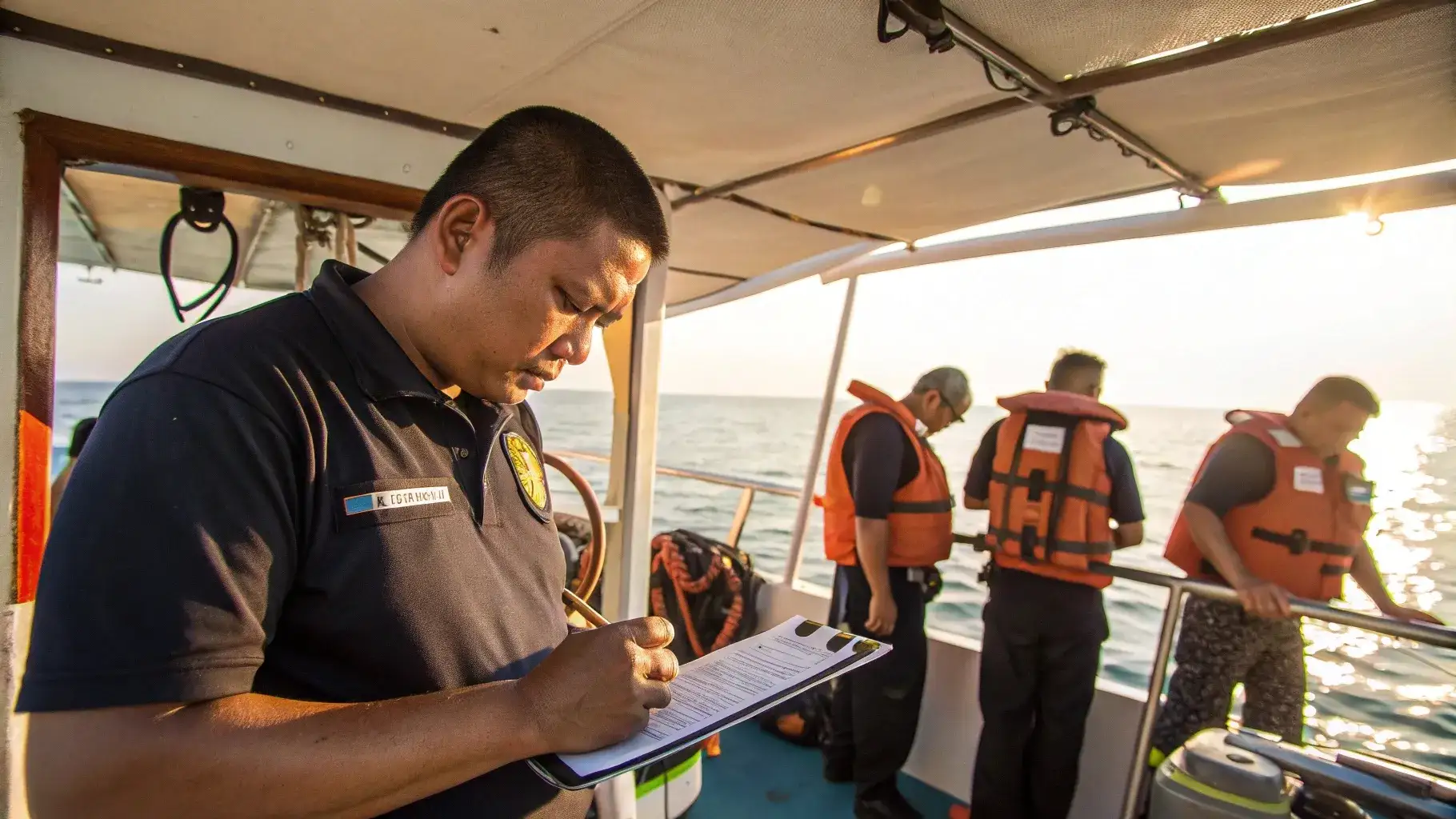
Serious operators treat Labuan Bajo harbor safety checks before Komodo trips as non‑negotiable. Before departure, partner skippers confirm the latest local marine forecast, wave height, and wind (especially around the narrow straits), visually inspect hull, engines, radios, and navigation lights, and log passenger manifests. Life jackets are laid out and counted, and a safety briefing covers muster points, man‑overboard signals, and what to do if you feel unwell in current or swell. Labuan Bajo boat accident risk on snorkeling tours is reduced when vessels avoid overloading, run daylight‑only itineraries, and respect park speed limits near snorkeling sites. Expect the captain to change plans or cancel if the harbor master, port security, or updated weather data indicates unsafe conditions. Reputable itineraries, including many Komodo sailing trips, build in alternate routes and sheltered bays for days when outer‑reef sites become marginal. Labuan Bajo snorkeling tour cancellation due to weather typically happens for three reasons: strong winds and high seas from the west or south, thunderstorms with heavy rain reducing visibility, or very strong surface currents at exposed channels. Operators may substitute protected sites like Kanawa, Sabolo, or protected sides of smaller islands, or move Siaba Besar to a calmer time of day. Fully cancelling is rare in the dry season, but more common during peak monsoon squalls. If you want snorkeling insurance coverage on Labuan Bajo tours, look for policies that explicitly mention “snorkeling and boating activities” as covered, and consider higher evacuation limits than for a city break. Some premium packages, especially private Komodo boat charters, can help you source third‑party travel insurance that includes emergency medical evacuation, but the insurance itself is always between you and the insurer—never the park authority. Cancellations due to weather usually trigger either a date change, route change, or partial refund, depending on your contract. For longer Komodo liveaboard charters, crews can often “chase” better weather within the archipelago. If precise rules matter to you, request the operator’s written cancellation and force‑majeure policy in advance and clarify who decides a day is unsafe: the captain, the harbor master, or the company’s shore manager.
Medical cover and currents
Komodo’s beauty comes with real forces of nature: strong tidal exchanges, remote bays, and limited on‑site medical infrastructure. Most snorkeling incidents are minor—scrapes on coral, jellyfish stings, fatigue in currents—but a sound plan anticipates worse. On every organized trip there should be at least one person with current first‑aid training, oxygen on board, a way to contact shore (VHF and phone), and a clear chain of command for Komodo snorkeling evacuation procedures. Komodo snorkeling emergency contact during a trip is always the boat captain or trip leader first: they coordinate on‑water response and contact shore‑side medical support. From Labuan Bajo, serious cases may be stabilized at a clinic or hospital, then moved onward. Medical evacuation from Komodo National Park can involve speedboat transfer to Labuan Bajo, and in rare, critical cases, emergency evacuation helicopter services arranged through private providers or your travel insurer’s assistance team. Helicopter dispatch is never instant; sea evacuation and stabilization are the realistic first lines. Many visitors ask where is the nearest hyperbaric chamber to Komodo. At time of writing, divers and medics treat Labuan Bajo as a staging point, with the most reliable full‑service hyperbaric facilities located in Bali (for example, DAN‑associated chambers and hospital‑based units around Denpasar and southern Bali). That means suspected decompression illness is typically managed by rapid boat or plane to Labuan Bajo, medical assessment, and then onward transfer by air to Bali where the hyperbaric chamber Bali network can receive patients. You may see older references to a hyperbaric facility in Labuan Bajo; availability, staffing, and certification can fluctuate. Before any technical diving, ask your chosen operator specifically about the current status of any hyperbaric chamber Komodo side, and which facility they use in practice. They should know the Labuan Bajo hyperbaric facility location and contacts if one is operational, as well as the exact referral hospital in Bali used for recompression treatments. Hyperbaric treatment cost near Komodo National Park is difficult to estimate in advance because it depends on chamber ownership (public vs. private), number and length of treatment sessions, and evacuation logistics. In Southeast Asia, full decompression illness management—including scans, multiple chamber rides, and medevac flights—can run into the thousands of US dollars. Because of this, any traveller considering scuba around Komodo should have dive‑specific insurance that includes hyperbaric coverage and emergency evacuation, not just standard health insurance. Snorkelers are at far lower risk of decompression illness than divers, but strong currents bring other hazards. Drift snorkeling safety tips in Komodo always start with conservative site choice: only attempt true drift experiences on sites your guide considers appropriate for your fitness and comfort, and never as a first‑time snorkeler. Stay close to the guide, follow the planned entry and exit points, keep your mask on at the surface, and learn basic hand signals before entering the water. Can non swimmers do drift snorkeling in Komodo? A non‑swimmer can sometimes join very calm, shallow, guided snorkeling with extra flotation and close supervision, but they should not be placed in fast drifts or channels. Komodo currents safe for kids with life jackets is a common misconception: a life jacket keeps a child afloat, but does not protect them from being swept into boat traffic or rocks. Children and weak swimmers should be limited to protected bays with negligible current and one‑to‑one adult supervision. We maintain conservative screening criteria for sites such as Siaba Besar. Siaba Besar snorkeling safety is generally excellent thanks to a sheltered lagoon and gentle slopes, but currents can still pick up around tidal changes and at the edges of the bay. Good practice is to time visits for slacker tides, keep groups within the main bowl of the bay, and have a tender boat watching surface markers. If currents look stronger than usual, guides may confine the group to shallower, inshore zones or cancel the session. For more context on how currents intersect with wildlife experiences, see our guide Is Snorkeling with Manta Rays in Komodo National, which explains why sites like Karang Makassar demand extra respect. You can also review park‑wide rules and visitor caps in Permits, Daily Quotas & New Komodo Park Rules 20 to understand how daily limits indirectly support safety by preventing overcrowding at popular drift sites.
Personal risk and family checklists
Safety is not only about the boat and crew; it is also about your body and your equipment. Komodo snorkeling safety for older adults depends on honest assessment: if you have reduced mobility, balance issues, or low baseline fitness, focus on sites with easy ladder access, calm water, and short swim distances. Take extra time on the ladder, and avoid jumping into unknown depths. Wearing a lightweight wetsuit or rash guard adds buoyancy and reduces fatigue, making it easier to rest at the surface. Komodo snorkeling safety for asthmatics or heart conditions requires medical clearance before travel. If you have asthma, bring your inhaler in a dry bag on the boat and tell the guide where it is. Avoid sprinting against current or pushing through cold shock. For cardiac histories—angina, arrhythmias, past heart attacks—discuss your trip with your cardiologist and avoid strong currents, long surface swims, and exertion in heavy chop. In both cases, the safest plan is to stay shallow, stay close to the boat, and exit the water early at any sign of chest tightness or shortness of breath. Many ask whether snorkeling Komodo while pregnant is safe. Snorkeling itself is generally considered lower risk than diving, but conditions here can be demanding. Snorkeling Komodo while pregnant safety tips include: only enter the water on calm days, avoid ladders that require big steps or jumping entries, use a snug life vest to reduce fatigue, and limit exposure to strong sun and dehydration. Always clear your plan with your obstetric provider, and skip any site your body or your doctor is unsure about. For families, a practical Komodo snorkeling safety checklist for families looks like this: A parallel Komodo snorkeling safety gear checklist for all ages should include: mask, snorkel, and fins you are already comfortable with; a long‑sleeve rash guard or 2–3 mm wetsuit; reef‑safe sunscreen; simple surface marker (bright rash guard or inflatable), and any prescription medication you might need between islands. Before flying in, review our packing overview in What To Pack For A Komodo Liveaboard & Island Ho; many items are hard to replace once you are at sea. Because many readers look up Komodo snorkeling accident stories before booking, it is worth framing the data: most reported incidents involve poor equipment fit, unsupervised children drifting away from the group, or guests ignoring instructions in strong current. Choosing operators who brief you thoroughly, limit group size, and tailor sites to ability goes much further than chasing “adrenaline drifts.” Private arrangements, such as those outlined in Group, Friends & Private Charter Planning For Ko, can give families and mixed‑ability groups more control over pace and site selection. If safety and compliance details are central to your planning, use our Komodo Island Snorkeling FAQ — 2027 Guide in combination with this page. For personalized guidance or to discuss specific medical or family concerns, contact the Komodo Luxury planning team via Contact Komodo Island Snorkeling; Komodo Luxury coordinates closely with its partner operators operators but always recommend you also speak with your own doctor and insurer.
Check every child’s mask fit in a pool or hotel before boarding, and practice breathing through a snorkel.
Use well‑fitting children’s life jackets plus an additional float (such as a noodle or buoy) for extra security.
Agree on a “buddy rule” where each child has a specific adult supervising them in the water at all times.
Limit first sessions to calm, shallow bays with exit points near the boat or beach.
Set conservative personal cut‑off times (e.g., 20–30 minutes) to avoid cold and fatigue.
Komodo Luxury — the booking partner for this guide
Where the boats actually come from
We publish the research; Komodo Luxury holds the fleet and the calendar.
If “Safety & Compliance” has you close to booking, start with Komodo boat tours with Komodo Luxury — the part of the trip worth locking in first, and it is worth setting that beside the Komodo Luxury fleet and Komodo liveaboards before you commit.