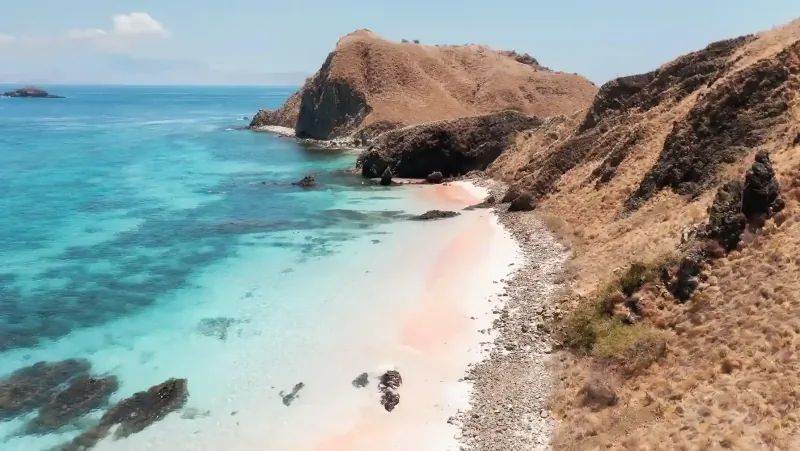
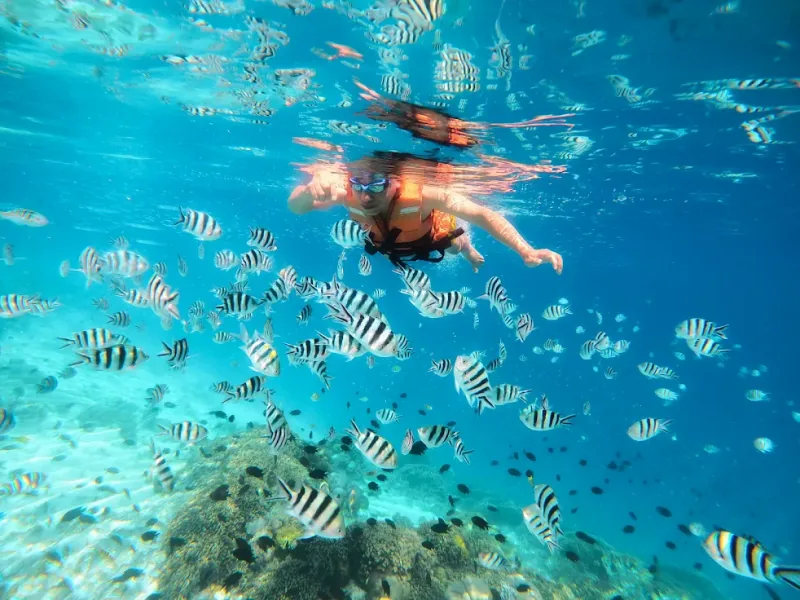
Pink sand, a sloping reef a few metres offshore, and blacktip sharks in the shallows. What the day looks like, what it costs, and where it sits against Manta Point.
Most travelers start their Flores Indonesia Komodo snorkeling holiday from Labuan Bajo, the main gateway port. From here you can choose between classic day tours, overnight trips, or multi-day cruises. A one-day circuit focused on Pink Beach and Karang Makassar works if you have tight time, but two to four days lets you add outer reefs like Gili Lawa, Siaba, Mawan, and Kanawa, with far better chances of calm conditions and flexible timing.
Key Snorkeling Sites Explained
Pernicious currents and varied seabed profiles mean not all famous Komodo sites are equal for snorkelers. Understanding the character of each reef helps you decide whether to include it in your day trip from Labuan Bajo or reserve it for a longer cruise. Below we focus on how each location feels from the surface rather than from a diver’s perspective.
Logistics
Many readers ask can you snorkel in Komodo National Park without joining a tour, or simply rent a mask in town and improvise. The short answer: you can rent gear and book simple local boats, but because of currents, distance, and permit logistics, most visitors are better served joining an organized trip, especially when visiting Pink Beach, manta sites, or dragon-inhabited islands.
Side by side
The boats
Feature
Private Charter
Small-Group Tour
Group Size
Your private group only (1-10 guests)
Maximum 12 guests
Itinerary
Fully flexible. Can be customized with your guide.
Follows the signature itinerary described here.
Pace
Determined by you. Linger longer at favorite spots.
Professionally paced to optimize the day.
Onboard Service
Dedicated guide and crew for your group.
Shared guide and crew. High guide-to-guest ratio.
Ideal For
Families, couples, photographers, and groups seeking exclusivity.
Solo travelers, couples, and small groups wanting a social, high-value experience.
Questions
What people ask
An informed traveler is a prepared traveler. Here are answers to common questions regarding snorkeling in Komodo National Park, curated from this guide’s research and from briefings by the operators who run these trips.
1. What is the ideal time of year for a Komodo snorkel tour?
The prime season for snorkeling in Komodo is during the dry season, which typically runs from April through November. During these months, you can expect calmer seas, minimal rainfall, and excellent water visibility, often exceeding 25 meters. The peak months are July and August, which offer the best conditions but also see the highest number of visitors.
2. How strong are the currents, particularly at Manta Point?
Komodo is renowned for its strong currents, which are the very reason for its incredible marine biodiversity. Sites and times are specifically chosen to be safe and manageable. At Manta Point (Karang Makassar), we conduct a “drift snorkel,” where the current is used to our advantage. You simply float along as the boat follows. The guides are experts in reading the currents and will only enter the water when conditions are safe. Weak swimmers will be provided with life jackets or flotation devices.
3. What is the scientific reason for Pink Beach’s color?
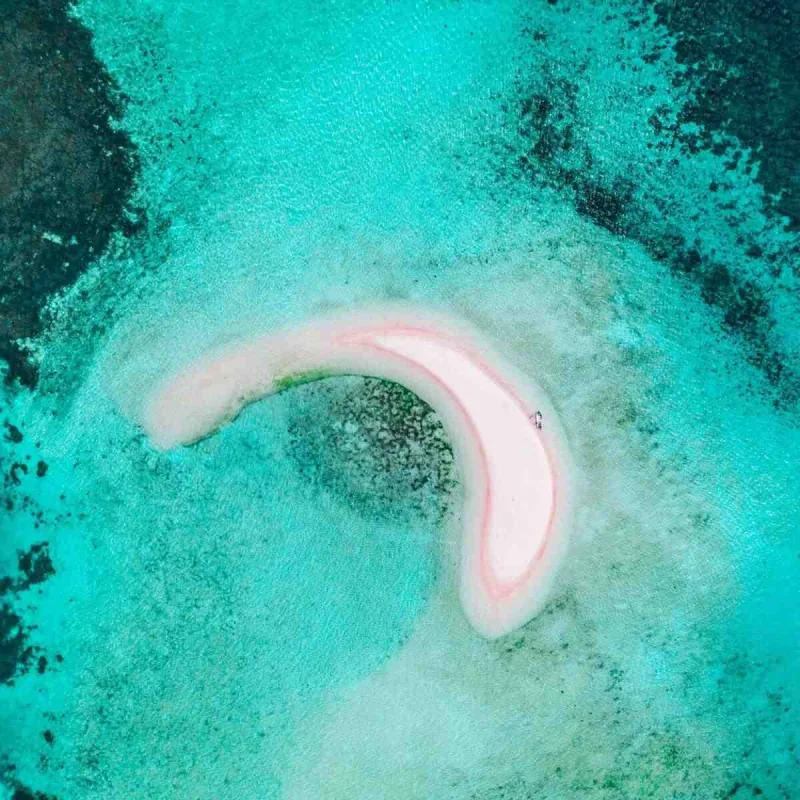
The distinct pinkish hue of the sand at Pantai Merah is a result of bioturbation. It is created by the crushed skeletons of tiny marine organisms called Foraminifera, which have a reddish-pink shell. These organisms live in the vast coral reefs surrounding the beach. When they die, their remains are washed ashore and mix with the white calcium carbonate sand, creating the signature blush color.
4. Are there specific safety protocols for snorkeling with manta rays?
Yes, responsible interaction is paramount. The guides enforce a strict code of conduct. This includes maintaining a respectful distance (at least 3-4 meters), never touching the animals, and not blocking their path. We approach the cleaning station slowly and enter the water calmly. The objective is passive observation, which ensures the mantas are not stressed and will continue their natural behavior.
5. What marine life can I expect to see besides manta rays?
The biodiversity is staggering. Beyond the reef mantas, you have a high probability of encountering multiple species of sea turtles (hawksbill and green), blacktip and whitetip reef sharks, eagle rays, and immense schools of fusiliers and surgeonfish. The coral gardens are home to hundreds of species of smaller fish, including various anemonefish, angelfish, and butterflyfish, as well as octopus, cuttlefish, and moray eels.
6. What should I bring on a day trip?
We recommend bringing swimwear, a hat, sunglasses, and reef-safe sunscreen to protect both your skin and the delicate coral ecosystem. A camera (especially an underwater one) is essential. Boats normally carry towels, but you may wish to bring a light jacket or sarong for the boat ride back, as it can get breezy.
Where to snorkel in Komodo National Park for different experience levels
If you want a structured outline, see our advice on how many days for Komodo snorkeling from Labuan Bajo: a focused 2-day plan covers highlights, while a 3–4 day Flores Komodo snorkeling cruise allows slower pacing and more flexible weather and tide calls.
Very calm & shallow (families/beginners): Kanawa Island (house reef), Manjarite Beach, Sabolo Kecil, Taka Makassar sandbank, some sections of Pink Beach at mid-tide.
Intermediate, light current: Siaba Besar, Mawan Komodo snorkeling sites, Karang Makassar on a mild-tide window.
Advanced only: Batu Bolong, outer reefs around Gili Lawa, some channels near Padar and Komodo Island. These require precise timing and an experienced guide.
One day vs two days: what realistically fits from Labuan Bajo
Snorkeling Komodo National Park one day vs two days is a trade-off between distance and depth of experience. In a single day, you can usually cover three main stops: for example Padar hike, Pink Beach Komodo snorkeling, and Karang Makassar manta drifting. A 2-day or overnight Komodo snorkel trip from Labuan Bajo adds sunset anchorage, night sky, and extra reefs such as Siaba or Mawan without the rush of a long return transfer. Those with three days can include both north (Gili Lawa Komodo trekking and snorkeling package elements) and central/south sites, plus quieter islands like Sabolo. For ideas on structuring a 3 day Komodo liveaboard snorkeling plan, compare short itineraries on curated Komodo sailing trips that focus on snorkeling instead of intense diving schedules.
Sample Flores Komodo snorkeling itinerary: 3 days from Labuan Bajo
A realistic 3-day Flores Komodo snorkeling itinerary from Labuan Bajo might look like this: For travelers who prefer a higher comfort level, air-conditioned cabins, and more privacy, consider mid-range to luxury options among the Komodo liveaboard charters, which can adapt this outline to your group’s pace and preferred sites.
Day 1: Depart Labuan Bajo early, snorkel Manjarite Beach, continue to Sabolo Island snorkeling near Labuan Bajo for late-afternoon glassy conditions, overnight near Sabolo.
Day 2: Sunrise trek Padar, Pink Beach snorkeling session at mid-morning slack tide, late-afternoon drift at Karang Makassar or Mawan for manta and turtles.
Day 3: Early snorkel at Siaba Besar (turtles, coral gardens), possible stop at Kanawa Island snorkeling house reef, return to Labuan Bajo by late afternoon.
Pink Beach Komodo snorkeling review and how it compares to Kanawa
Pink Beach is known for its photogenic shoreline and gentle slope: you can snorkel directly from the beach in Komodo here, entering over light sand and seagrass before reaching coral heads. Coral variety is good but shallow areas can be crowded and slightly trampled. Snorkeling Pink Beach vs Kanawa for first timers: Pink Beach wins for scenery and dragons nearby, while Kanawa often wins for clearer, calmer water and a more continuous house reef with fewer waves on typical days.
Can you snorkel directly from the beach at Kanawa, and is it beginner-friendly?
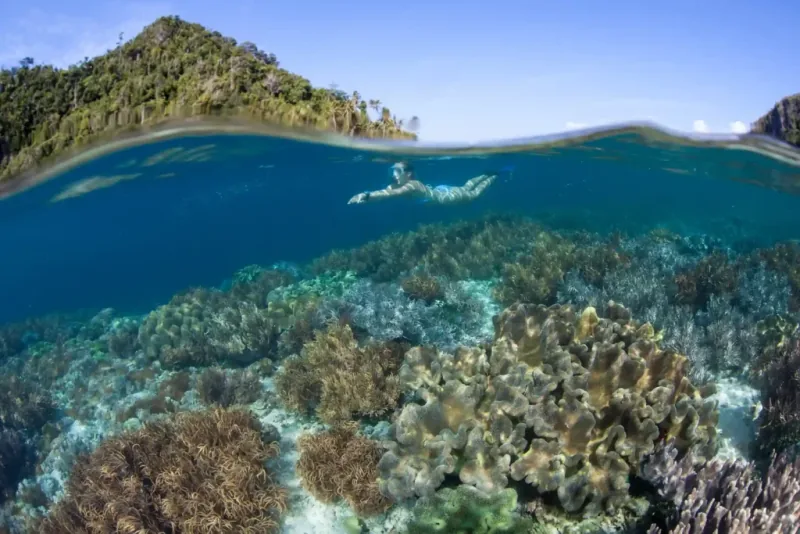
Yes, you can snorkel directly from the beach at Kanawa; the reef starts a short swim from the shore. For many travelers, Kanawa Island snorkeling day trip from Labuan Bajo is their first taste of the park. Conditions are often sheltered, with shallow coral gardens and reef fish in 1–4 m of water. It’s one of the better beginner snorkeling spots in Komodo, though footwear and care around coral rubble are still important.
Gili Lawa trekking and snorkeling, plus how to reach it
Gili Lawa in the north is a classic sunrise or sunset hike combined with snorkeling on nearby reefs and points. To get to Gili Lawa snorkeling spots from Labuan Bajo you need a boat able to handle longer open-water crossings; day trips can reach it but run long hours, so it’s more comfortably included in a 2–4 night Flores Komodo snorkeling cruise. North Komodo has clearer water in the dry season but also stronger currents, so this zone suits confident snorkelers best.
Karang Makassar vs Manta Point, and the role of Taka Makassar
There is often confusion between Karang Makassar Komodo snorkeling, the so-called “Manta Point,” and nearby Taka Makassar sandbank. Karang Makassar is a long reef and rubble area where mantas cruise and clean; several drift-snorkel lines are possible depending on the tide. Many operators use the term Manta Point for this same zone. Taka Makassar sandbank lies nearby and offers extremely shallow turquoise water, great for non-swimmers and children between manta sessions. Karang Makassar vs Manta Point for snorkeling usually comes down to timing rather than location name. What matters is arriving during a tide window when current is manageable and plankton is present but visibility is still acceptable. For a more detailed safety breakdown of snorkeling with rays in moving water, read our guide on snorkeling with manta rays in Komodo.
Mawan, Manjarite, Sabolo, and Batu Bolong: which are suitable for you?
Mawan Komodo snorkeling sites (often just called “Mawan”) sit in the central area and combine sloping reef, patches of sand, and occasional manta visits. Currents range from mild to moderate. Manjarite Beach, closer to Labuan Bajo, offers calm, shallower coral gardens and is a popular stop on Labuan Bajo snorkeling day trip price comparison itineraries aimed at families and casual swimmers. Sabolo Island snorkeling near Labuan Bajo is slightly farther out, with good visibility and patches of healthy coral; it’s a lower-stress option on days with visible chop further inside the park. By contrast, is snorkeling at Batu Bolong Komodo safe for beginners? Generally no. Batu Bolong has world-class biodiversity but is exposed and current-prone; even advanced snorkelers should follow strict timing and supervision, as outlined in the specialist article on this site on tackling Komodo’s currents safely.
Can you snorkel Komodo without joining a tour, and what about Labuan Bajo only?
Legally you can hire a private boat and skipper instead of a packaged tour, but you still need park entry tickets, a ranger/guide on certain islands, and a captain who understands tides and Komodo’s channels. Snorkeling Labuan Bajo without tour is technically possible along the mainland coast, yet the reefs near town are less pristine than those inside the park. Strongly consider at least a basic shared day boat with a licensed operator for any Komodo island snorkeling beyond the immediate harbor.
Snorkel rental and life jacket provision on Komodo tours
Snorkel rental in Labuan Bajo for Komodo trips is widely available through tour offices, dive shops, and many boats themselves. Quality ranges from basic to high-end; if you’re particular about fit or optics, bringing your own mask and snorkel is wise. Is life jacket provided on Komodo snorkeling tours? Reputable boats always carry buoyancy aids; check that every participant, especially children and weaker swimmers, is fitted with an appropriately sized vest or snorkel jacket before departure.
Typical tour prices from Labuan Bajo, and how Pink Beach fits in
Pink Beach snorkeling tour price from Labuan Bajo depends on boat type (open wooden boat vs speedboat vs yacht), group size, and how many stops you combine in one day. When doing a Labuan Bajo snorkeling day trip price comparison, look beyond headline prices to see what’s included: park fees, snorkeling gear, ranger fees on Komodo and Padar, meals, and any hotel transfers. Luxury options cost more but usually spread guests across roomy decks and add higher-caliber safety equipment. If your priority is comfort and time efficiency rather than rock-bottom pricing, study the inclusions and service level on curated Komodo boat charters and use our separate luxury Komodo snorkeling tour price guide to benchmark what’s reasonable for private versus shared departures.
Komodo National Park snorkeling vs Raja Ampat, and visibility expectations
Komodo National Park snorkeling vs Raja Ampat is less about which is “better” and more about style. Komodo’s strengths include manta encounters, pink and white beaches, and a tight cluster of signature sites reachable from one base in Flores. Raja Ampat offers even higher coral diversity and more remote feeling, but requires more time and budget. Snorkeling visibility in Komodo is often 15–30 m in the dry season, with slightly greener, more plankton-rich water at peak manta months. To optimize both visibility and current softness around Pink Beach and the mantas, align your dates with the dry season windows explained in the guide to the best time for Komodo Island snorkeling. Remember that mantas can be seen year-round, but their big aggregations at Karang Makassar coincide with plankton swells that may reduce horizontal visibility somewhat.
Safety, regulations, and booking channels
Whatever itinerary you choose, prioritize safety practices and environmental standards. Read our overview of Komodo Island snorkeling safety and trust, and note that park entry fees and visitor quotas are set by the national park authority, not by operators. Since April 2026, entry to Komodo and Padar requires an advance SiOra e-ticket; operators will typically handle this while you supply passport details. To reserve a luxury Komodo snorkeling cruise that balances Pink Beach, mantas, and quieter reefs, review vessel options on Komodo Luxury’s fleet page.
Can you snorkel in Komodo National Park if you are a total beginner?
Yes, you can snorkel in Komodo National Park as a beginner, but you must choose sites carefully. Focus on sheltered locations like Kanawa, Manjarite, Sabolo, or the shallower parts of Pink Beach. Avoid high-current spots such as Batu Bolong or exposed corners of Gili Lawa. Always wear a life jacket, stay close to your guide, and don’t enter if surface conditions look rough.
Can you snorkel from the beach in Komodo, or do you always need a boat?
You can snorkel from the beach in Komodo at several locations, including Pink Beach and some sandy coves on nearby islands. However, most of the best reefs and manta cleaning stations are only accessible by boat. Even when entering from shore, your vessel still needs to anchor nearby, and a guide should brief you on currents, boat traffic, and how far from the beach it is safe to swim.
Is snorkeling at Batu Bolong in Komodo safe for beginners?
Snorkeling at Batu Bolong is not recommended for beginners because the site is highly exposed to currents and downwellings. While the reef is outstanding, conditions can change quickly and require precise timing plus strong water skills. New snorkelers are much safer at calmer, shallower reefs like Manjarite or Kanawa. For those with experience, read our detailed current-safety advice before attempting Batu Bolong.
How many days do I really need for Komodo snorkeling from Labuan Bajo?
For a basic introduction, 1 day from Labuan Bajo is enough to see Pink Beach and one manta or turtle site, but it will feel rushed. Two days lets you add a sunset anchorage and extra reefs like Siaba or Mawan. Three days is ideal for combining Padar, Komodo dragons, mantas, Pink Beach, and some quieter snorkel spots without exhausting travel days on the boat.
Can you snorkel Komodo without joining an organized tour group?
You can avoid a group tour by chartering a private boat with captain, but you still need park tickets, ranger fees, and a crew who understands local tides. Completely independent snorkeling from shore is limited and rarely hits the best sites. Most visitors, especially first-timers, are safer and more efficient joining a structured day trip or liveaboard that handles permits, routing, and safety planning.
Is snorkeling with manta rays at Karang Makassar and Manta Point safe?
Snorkeling with mantas at Karang Makassar and the area often called Manta Point is generally safe when timed for moderate currents and supervised by experienced guides. You drift with the boat following, rather than swimming hard. The main risks are current strength and boat traffic, not the mantas themselves. Read our dedicated safety guide on snorkeling with manta rays in Komodo before you go.
What is the difference between Karang Makassar and Taka Makassar for snorkelers?
Karang Makassar is a long reef and rubble zone where manta rays often feed and clean, usually explored via controlled drift snorkels. Taka Makassar is a nearby sandbank with ultra-shallow turquoise water and small coral patches, ideal for resting, beginners, and non-swimmers. Many tours stop at both: Karang Makassar for manta action, then Taka Makassar for calm, shallow playtime and photos.
How does Komodo National Park snorkeling compare to Raja Ampat?
Komodo National Park snorkeling stands out for reliable manta encounters, pink and white beaches, and easy access from Labuan Bajo, making it doable in a few days. Raja Ampat offers even higher coral diversity and a more remote feel but requires longer travel and bigger budgets. If you want dragons, mantas, and iconic viewpoints in one compact trip, Komodo is typically the more efficient choice.
Can you snorkel at Pink Beach Komodo during the rainy season?
Yes, snorkeling at Pink Beach is excellent during the rainy season, which typically runs from December to March. This period often brings calmer sea conditions and fewer crowds. While you might experience brief tropical rain showers, they rarely last all day. Water visibility can occasionally be reduced after heavy rain, but the vibrant marine life and coral reefs remain a spectacular sight year-round.
How does Komodo National Park snorkeling compare to Raja Ampat?
Komodo is celebrated for its dramatic volcanic landscapes, strong currents, and reliable encounters with large marine life like manta rays, sharks, and huge schools of fish. Raja Ampat is famed for having the world’s highest marine biodiversity, with unparalleled soft coral gardens and an overwhelming number of fish species. To compare snorkeling in Komodo National Park and Raja Ampat for a 7 day trip, Komodo is more accessible and logistically simpler from Labuan Bajo, while Raja Ampat’s vastness is best explored on a longer Komodo liveaboard-style trip to do it justice.
Do I need a guide to snorkel anywhere in Komodo National Park?
Yes, a professional local guide is essential for both safety and maximizing your experience. Komodo’s currents are famously strong and can change rapidly. A guide understands the tidal patterns to ensure you enter the water at the safest time and place. They also handle all park logistics and are experts at spotting marine life you might otherwise miss. We only list a private boat charter when an experienced, certified guide is part of it.
What’s the main difference between Pink Beach and Manta Point for a snorkeler?
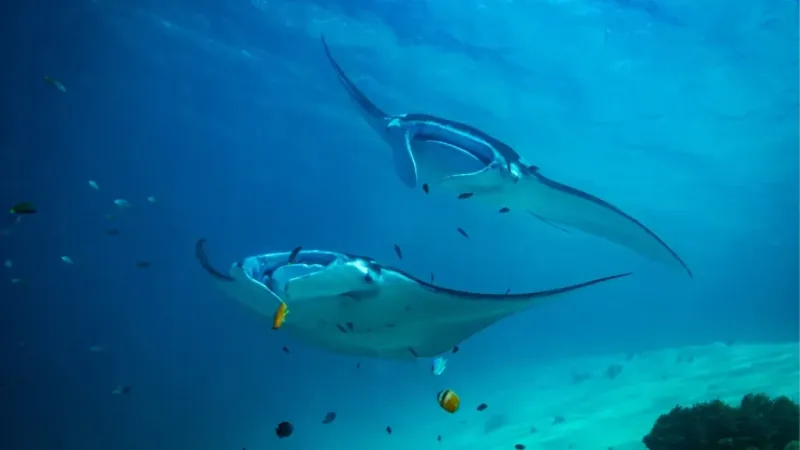
Pink Beach offers a classic, vibrant reef snorkel with incredible coral diversity and thousands of colourful reef fish in generally calm, shallow water. It’s about immersion in a complete, thriving ecosystem. Manta Point (Karang Makassar), conversely, is a drift snorkel over a sandy, rubble-strewn channel. The primary goal here is a specific, thrilling encounter: observing majestic manta rays as they gracefully glide through the current to feed or be cleaned.
Is it safe for beginners to snorkel at Batu Bolong?
No, Batu Bolong is not a safe or suitable site for beginner snorkelers. It is an advanced, open-ocean pinnacle known for its powerful and unpredictable currents, making it primarily a dive site. While a tiny sheltered area can sometimes be snorkeled at slack tide, this is a rare opportunity that requires an expert guide’s on-site assessment. Beginners will have a much safer and more enjoyable experience at protected sites like Pink Beach or Kanawa Island.
Is a wetsuit necessary for snorkeling in Komodo in July?
A wetsuit is not strictly necessary but is highly recommended for comfort, especially in July. At the height of the dry season (June–August), water temperatures can drop to around 24–25°C due to cooler currents from the south. While you can certainly snorkel without one, a 3mm shorty wetsuit will prevent you from getting chilled, allowing you to enjoy longer and more frequent snorkeling sessions throughout your day trip without discomfort.
Pink Beach Komodo Snorkel
The water is a shade of crystalline turquoise that seems to generate its own light. As you slip from the edge of the private speedboat, the immediate warmth—a consistent 28°C—is a welcome embrace. Below, the seabed is not white, but a soft, blushing rose. This is Pink Beach, or Pantai Merah, one of the seven beaches of its kind on the planet. The phenomenon is a direct result of microscopic red Foraminifera organisms, which grow on the local coral reefs and whose fragments mix with the fine white sand. Through your mask, the world resolves into sharp focus: schools of fluorescent damsels dart through staghorn coral, and a hawksbill turtle, ancient and unperturbed, glides over a garden of soft anemones. This is not just a glimpse of the underwater world; it is a full immersion into the vibrant, beating heart of Komodo National Park, a UNESCO World Heritage site established in 1991. See also: the Manta Point snorkeling guide. A journey here is a study in contrasts. The arid, savannah-like hills of the islands, home to the endemic Komodo dragon (Varanus komodoensis), fall away to meet some of the most biodiverse marine ecosystems on Earth. Located within the Coral Triangle, this region hosts over 1,000 species of fish and more than 260 species of reef-building coral. For the discerning snorkeler, a day trip from the port of Labuan Bajo is an exercise in precision and curation. It is about accessing the most pristine sites at the optimal times, guided by local experts who understand the currents and seasons. This is the essence of a Komodo Island snorkeling expedition—a direct encounter with a world of profound natural significance, centered on the essential pillars of any visit: the surreal sands of Pink Beach and the majestic ballet of manta rays at Manta Point.
Pink Beach and Manta Point together
While Komodo National Park contains a constellation of over 50 designated dive and snorkel locations across its 1,733 square kilometers, two sites form the core of its international reputation. A meticulously planned Komodo snorkel tour must feature both Pink Beach and Manta Point (Karang Makassar) to be considered complete. These are not merely stops on a map; they are distinct biological arenas offering profoundly different, yet equally compelling, underwater encounters. Pink Beach delivers an experience of intense color and intricate life. The relatively shallow, protected waters allow for extended periods of observation. Here, the focus is on the reef itself: the architecture of the hard corals, the diversity of smaller reef fish like the clownfish and butterflyfish, and the possibility of spotting juvenile blacktip reef sharks patrolling the edges. The unique pink hue of the sand, most vibrant where the water meets the shore, provides a photographic backdrop unlike any other. It is a place for detailed exploration, for hovering over a coral bommie and watching the complex society of the reef unfold. See also: Check dates with Komodo Luxury. In contrast, Manta Point offers a spectacle of scale and grace. This is not a reef in the traditional sense, but a vast, current-swept channel with a rubble bottom. This specific geography creates a “cleaning station,” where massive reef manta rays (Mobula alfredi), with wingspans reaching up to about 5.5 meters, congregate to have parasites removed by smaller wrasse. The experience here is one of patient observation, drifting with the mild current as these gentle giants materialize from the blue, soaring in silent, effortless flight. A well-managed Pink Beach snorkel and Manta Point combination trip respects the rhythms of both environments, allocating sufficient time to appreciate the macro-details of one and the grand spectacle of the other.
How the day runs
Efficiency and experience are paramount in a remote archipelago governed by tides and currents. The single-day itinerary set out here reflects hundreds of trips run by Komodo Luxury’s operators, refined to maximize marine encounters while ensuring comfort and safety. You depart Labuan Bajo early to arrive at key locations before the larger crowds, utilizing the speed and agility of the twin-engine vessels. See also: the Komodo Island snorkeling overview. Sample Itinerary (Timings are approximate and subject to sea conditions):
07:00 – 07:30: Private vehicle transfer from your hotel in the Labuan Bajo area to the main harbor.
08:00: Departure from Labuan Bajo. Your guide will provide a comprehensive safety briefing and an overview of the day’s marine life as you cruise towards the heart of Komodo National Park. The journey to the first stop takes approximately 60-75 minutes.
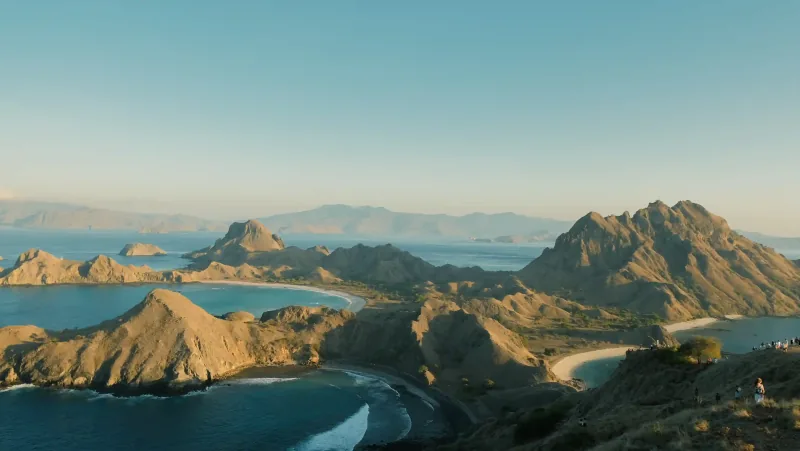
09:15: Arrival at Padar Island. You undertake the rewarding 30-minute trek to the summit. From this vantage point, you gain a true sense of the park’s topography: a dramatic landscape of three distinct bays, each with a different colored sand beach—white, black, and pink. This is the definitive photographic moment of the land-based portion of your tour.
10:45: Depart Padar Island for the short journey to Pink Beach.
11:15: First snorkeling session at Pink Beach. Spend over an hour exploring the vibrant, shallow coral gardens directly off the rose-colored shore. The visibility here often exceeds 20 meters.
12:45: A freshly prepared lunch is served on board the speedboat, featuring a mix of Indonesian and Western dishes, fresh fruit, and refreshments.
13:45: Cruise to Karang Makassar, the celebrated Manta Point. This is a drift snorkel; the boat will follow the group as you are carried by the gentle current across the manta ray cleaning station.
14:15: Second snorkeling session, focused on observing the congregations of reef manta rays. Your guide will be in the water with you to ensure safe and respectful interaction with these magnificent creatures.
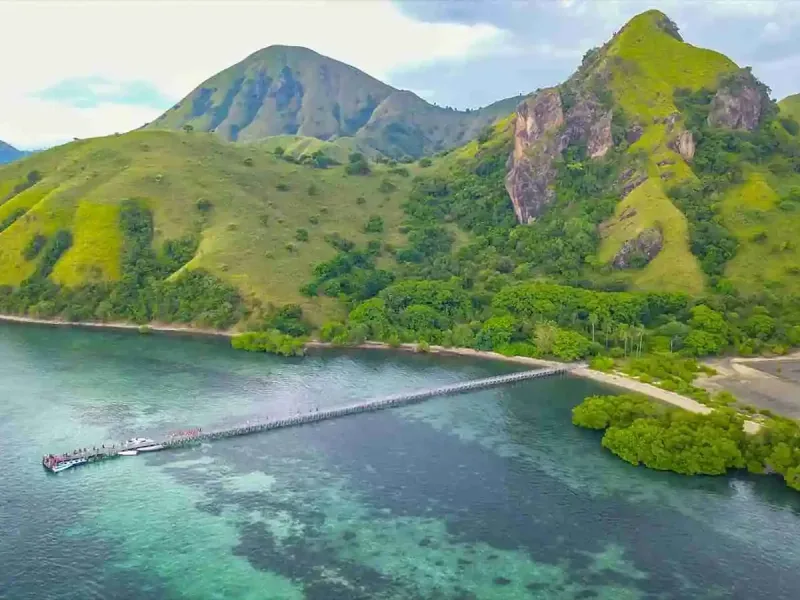
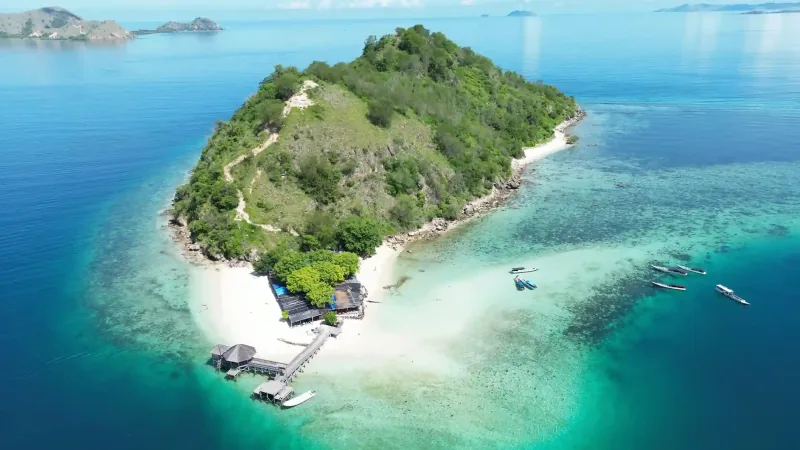
15:30: Final stop at Manjarite Island. This location is known for its calm, clear water and a long wooden jetty that extends over a thriving reef, perfect for a relaxed final snorkel amidst schools of fish.
16:30: Commence the return voyage to Labuan Bajo, enjoying the afternoon light on the islands.
17:30 – 18:00: Arrive back at Labuan Bajo harbor for your transfer back to your hotel.
The boats
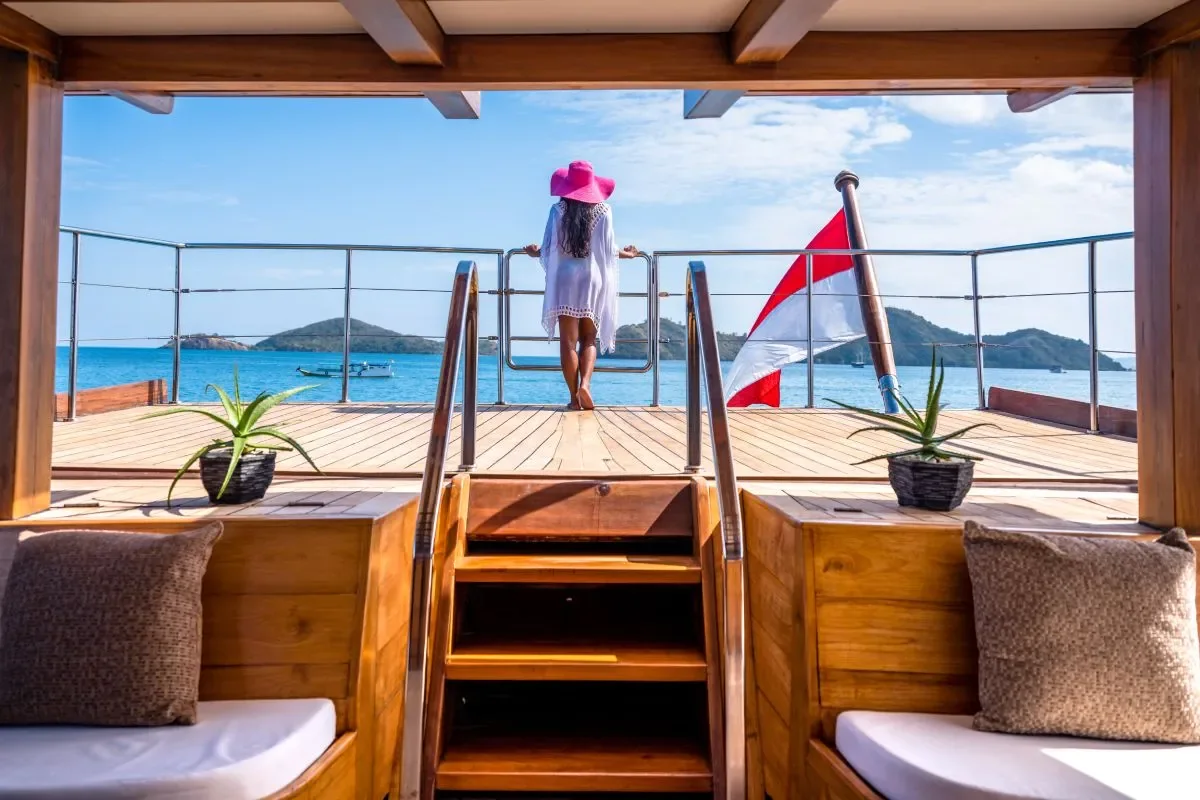
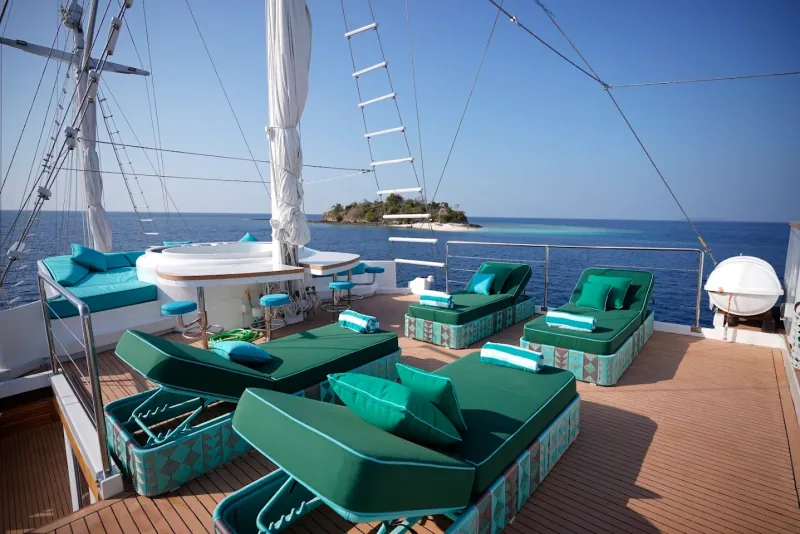
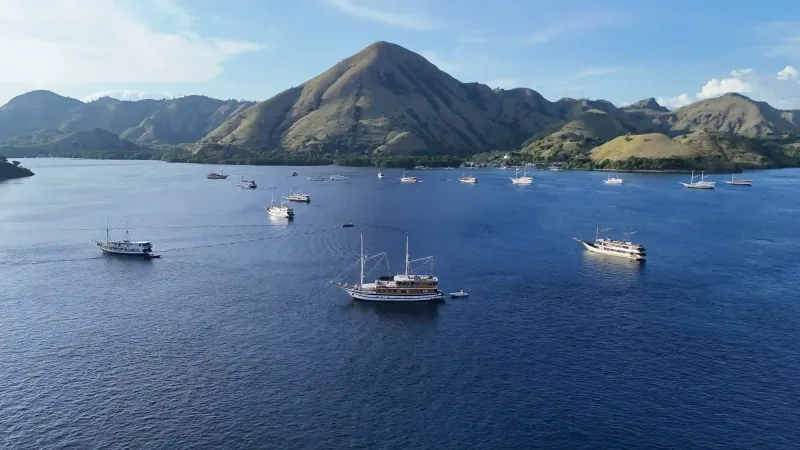
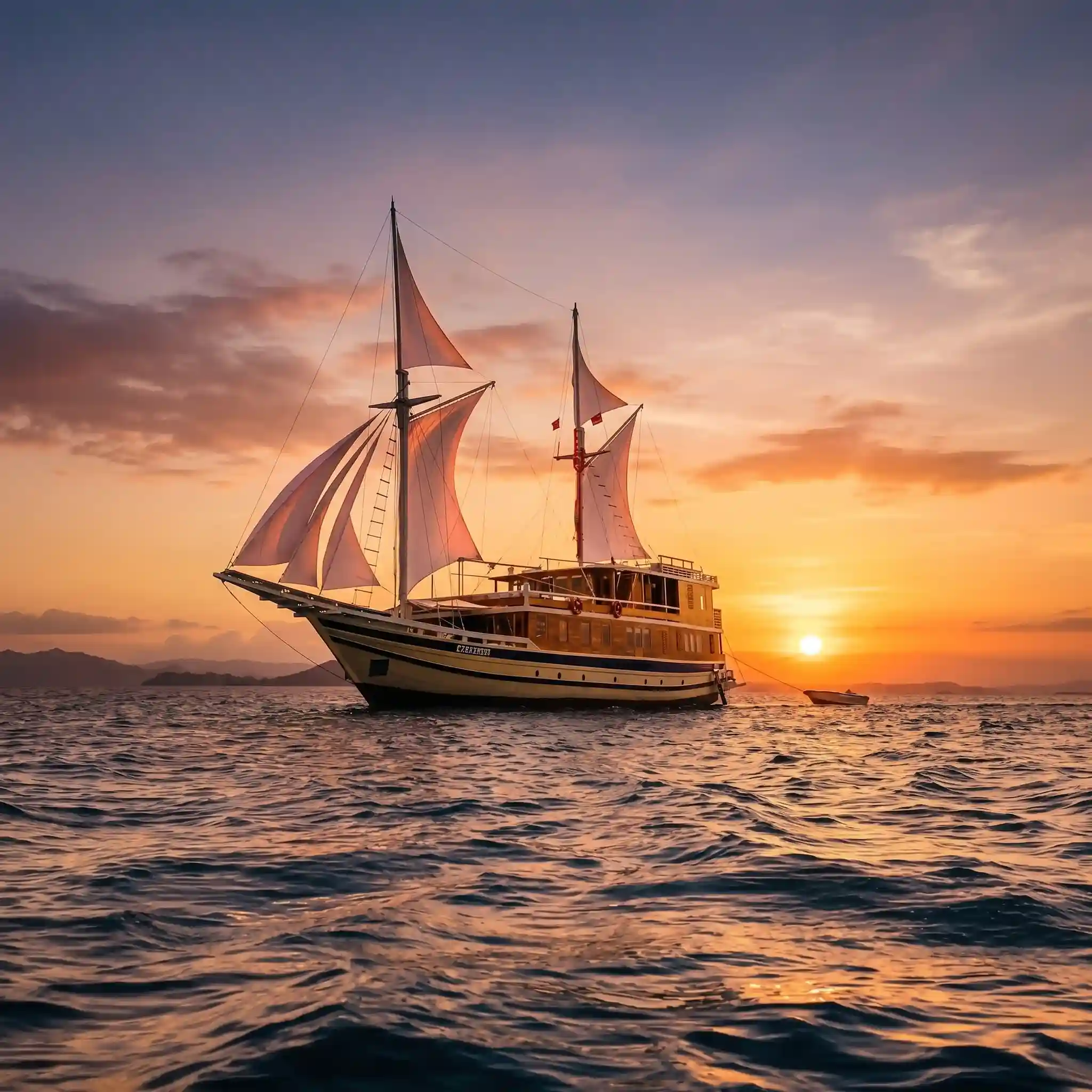
The vessel is a critical component of any successful marine expedition. The boats Komodo Luxury books are modern fiberglass speedboats built for the conditions of the Komodo archipelago. Safety, speed, and comfort are the criteria they are checked against. Each vessel is powered by twin 250hp outboard engines, ensuring swift transit between islands and the ability to adjust the itinerary based on real-time conditions. The captains are seasoned local mariners with an intimate knowledge of the park’s channels and currents. See also: the best time for Komodo snorkeling. Two distinct service levels exist for Komodo Island snorkeling day trips, allowing you to tailor the experience to your preference. Both formats, private and small-group, run on the same standard of vessel and safety equipment: marine-grade GPS and communication systems, life jackets for every passenger, and first-aid kits. The snorkeling gear carried on board comes from reputable brands and is maintained and sanitised after every use.
What is included
Pricing on this page is set out in full, and so is what the package covers. The day is designed to be seamless, with the logistics carried by the operator’s own team. The focus of your Labuan Bajo snorkeling trip should be on the marine environment, not on transactional details. What Is Included in Your Tour:What Is Not Included:
Small-Group Day Tour: From USD 90 per person.
Private Charter Day Tour: From USD 800 per boat (up to 8 guests).
Return hotel transfers in an air-conditioned vehicle (Labuan Bajo area).
Modern speedboat with twin engines, captain, and crew.
Experienced English-speaking snorkeling guide.
High-quality snorkeling equipment (mask, snorkel, fins) and life jackets.
A freshly prepared lunch served on board.
Unlimited mineral water, soft drinks, and fresh fruit throughout the day.
Beach towels.
Komodo National Park Entrance Fees: These fees are mandated by the government and are subject to change. As of August 2026, the official PNBP entrance fee is a flat IDR 250,000 per person for international visitors (PP No. 36/2024), payable in Indonesian Rupiah, plus a small ranger fee — see our full fee and quota breakdown. Komodo Luxury facilitates this payment for you.
Flights to/from Labuan Bajo (LBJ).
Travel insurance (highly recommended).
Gratuities for the guide and boat crew.
Booking it
Booking your definitive Komodo snorkeling experience with Komodo Luxury is a straightforward process designed for your convenience. Follow these simple steps to reserve your place in one of the world’s most coveted marine environments. Step 1: Inquiry & Consultation Contact the Komodo Luxury booking team via email at [email protected] or by phone/WhatsApp at +62 811-3823-875. Please provide your desired tour date(s), the number of guests in your party, and whether you are interested in a Private Charter or a Small-Group Tour. Komodo Luxury will reply with availability and a quote. Step 2: Confirmation & Deposit Once you are ready to confirm, Komodo Luxury sends a secure online payment link for the deposit that holds your reservation, and accepts all major credit cards. The deposit amount is stated in the quotation. Step 3: Final Details & Payment Roughly 14 days before the tour date, Komodo Luxury confirms your Labuan Bajo hotel details for pickup and processes the final balance, and sends a detailed pre-trip document with packing suggestions and a reminder of your itinerary. Step 4: The Expedition The operator’s driver meets you at your hotel lobby at the designated time. From there the crew handles every detail, which leaves you free to take in the natural spectacle of Komodo National Park.
If one day is not enough
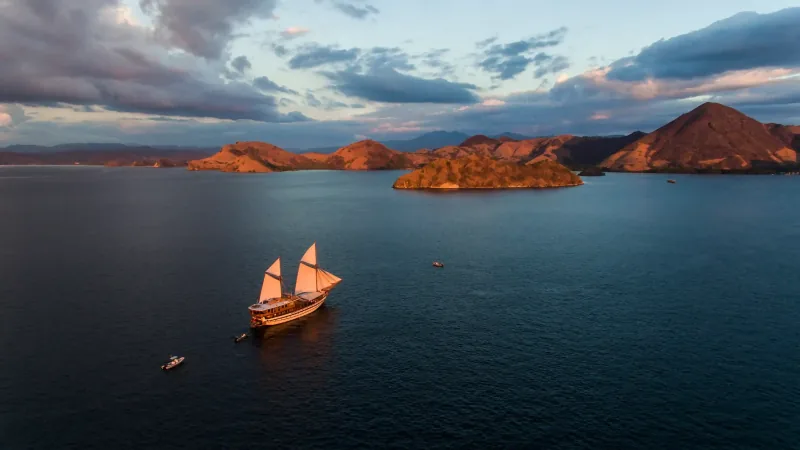
For those who want to venture deeper into the remote corners of the Komodo archipelago, a one-day outing is only an introduction. Komodo Luxury also arranges multi-day snorkelling expeditions that link Pink Beach, manta cleaning stations, sandbanks, and lesser-visited reefs into a coherent, well-paced journey on a multi-day private liveaboard charter. These expeditions, typically ranging from 3-day/2-night to 5-day/4-night itineraries, allow access to the park’s more distant and less-visited sites in both the northern and southern regions. A liveaboard journey offers the distinct advantage of waking up directly at a snorkel site, experiencing the magic of sunrise over the islands, and snorkeling multiple times per day in diverse locations. Itineraries can be tailored to include the southern reaches of the park near Rinca and Padar, which are known for cooler waters but even more prolific marine life, or the pristine coral reefs of the north. Contact the Komodo Luxury team to discuss crafting a bespoke multi-day Komodo Island snorkeling liveaboard charter.
Currents, gear and guides
A successful snorkel trip to Pink Beach is built on more than just a beautiful destination; it’s grounded in safety, preparation, and expert local knowledge. The waters of Komodo National Park are a dynamic environment, where understanding tides and currents is not just beneficial, but essential. This is why our core philosophy is that Komodo Pink Beach snorkeling safety begins with a professional crew. Every trip Komodo Luxury facilitates includes a thorough safety briefing, readily accessible life jackets, and a captain who understands the park’s complex hydrodynamics. The most critical safety component, however, is your guide. Answering the common question, do you need a guide to snorkel in Komodo, is simple: yes, absolutely. A certified local guide does more than point out marine life; they are your in-water risk manager. They assess currents in real-time, select the safest entry and exit points, and ensure the group stays within protected areas. This is non-negotiable, especially at sites with variable conditions. While Pink Beach itself is often sheltered, nearby channels can have powerful flows, and a guide’s expertise is paramount. Proper attire is the next layer of preparation. When considering what to wear for snorkeling at Pink Beach Komodo, think sun and thermal protection. The equatorial sun is intense, making a long-sleeved rash guard and reef-safe sunscreen mandatory. Regarding water temperature, many ask, can I snorkel Komodo without a wetsuit in july? The answer depends on your tolerance for cold. From June to August, upwellings can drop water temperatures to 24-25°C. While many find this refreshing, a 3mm shorty wetsuit can significantly extend your time in the water, allowing for more comfortable and prolonged exploration. All the day trips listed here provide standard masks, snorkels, and fins, but we always recommend bringing your own mask for a guaranteed perfect fit. For a detailed breakdown, see our guide on what snorkeling gear to bring to Komodo.
Strategic Snorkeling
When planning a day trip, understanding the trade-offs between Komodo’s iconic snorkel spots is key to crafting your perfect marine adventure. It’s not just about where you can snorkel in Komodo National Park, but about the unique experience each site offers. The classic pairing on many private speedboat charters is a study in contrasts, perfectly illustrating the Komodo Pink Beach vs Manta Point snorkeling debate. Pink Beach is the quintessential coral garden. Here, you’ll spend your time exploring a vibrant, sloping reef teeming with thousands of anthias, butterflyfish, and angelfish. The water is typically calm and clear, making it an ideal location for underwater photography and relaxed exploration for all skill levels. Manta Point (more accurately, Karang Makassar) is its polar opposite. It is not a coral reef but a vast, current-swept channel of sand and coral rubble. The experience here is a thrilling drift snorkel, where the sole purpose is to encounter majestic reef manta rays as they feed and visit cleaning stations. The combination delivers both a world-class reef and a premier large-animal encounter in a single day. A frequent query from ambitious snorkelers is, can I snorkel at Batu Bolong or only dive? Batu Bolong is a legendary offshore pinnacle, but its exposed location means it is subject to ferocious, often dangerous currents. For this reason, it is overwhelmingly treated as a dive site. Snorkeling is only feasible in a tiny, sheltered pocket on the lee side of the rock, and only during the precise window of slack tide. This is an on-the-spot call made by only the most experienced guides; it is never a guaranteed stop and is unsuitable for beginners. You can explore more on the distinctions in our guide comparing Komodo snorkeling and diving. To put Komodo in a wider context, people often compare snorkeling in Komodo Pink Beach and gili air. Gili Air offers wonderfully convenient, shore-accessible snorkeling with a high probability of seeing sea turtles. It’s relaxed and perfect for a casual dip. Komodo, by contrast, is an expedition. The biodiversity is an order of magnitude greater, the landscapes are raw and prehistoric, and the entire experience is boat-based, venturing into a protected UNESCO World Heritage Site. While Gili is a lovely holiday spot, Komodo is a premier global snorkeling destination.
Komodo Luxury — the booking partner for this guide
Where the boats actually come from
We publish the research; Komodo Luxury holds the fleet and the calendar. These are the pages where a quote actually gets made.
We will tell you which of the published bands your trip lands in, what the park will charge you, and hand the quote to Komodo Luxury. No obligation, and no price on this page changes because you asked.