Booking Your Luxury Raja Ampat Yacht Charter: A 2027 Guide for Families and Groups
Komodo Island Snorkeling Editorial Desk 20 min read
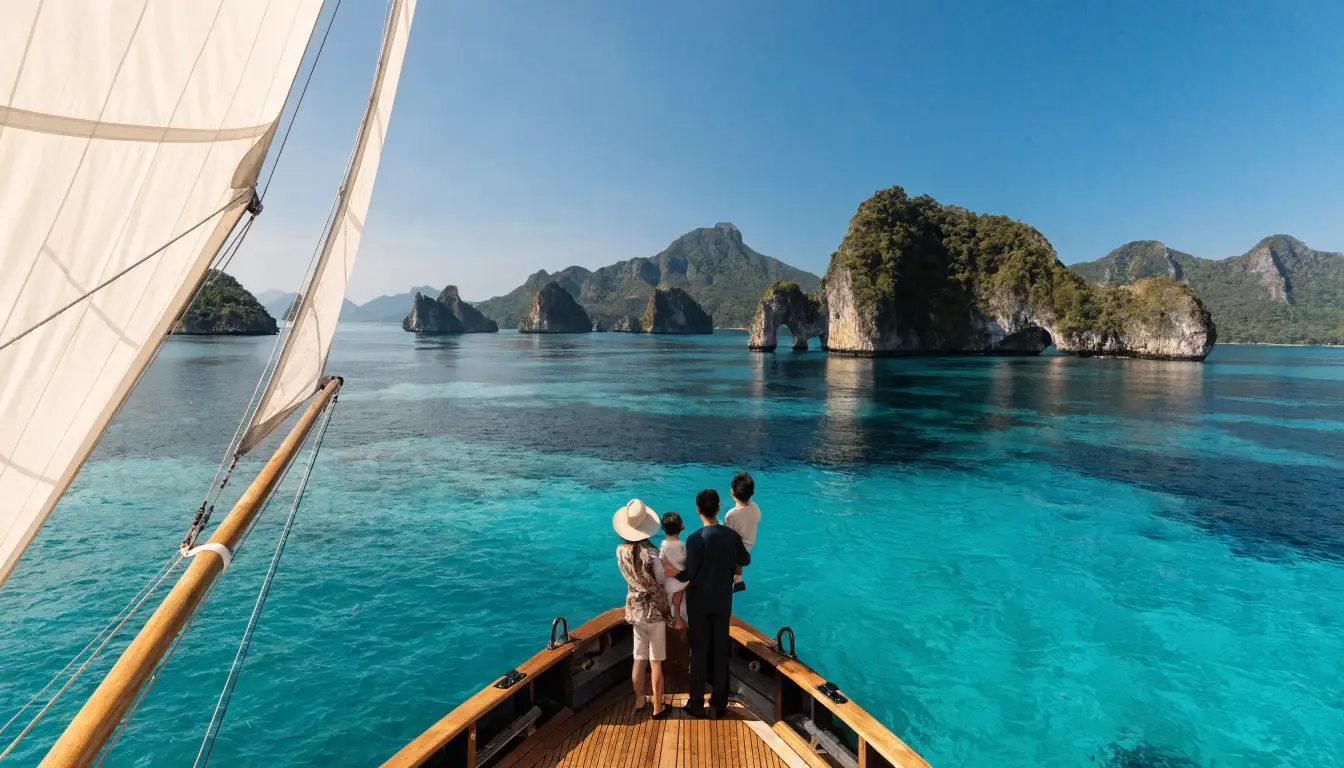
Booking a luxury Raja Ampat yacht charter for 2027 requires careful planning, especially for families and groups. Expect to pay between USD 60,000 and USD 182,000+ per week for a full vessel accommodating 8–18 guests, with peak season rates applying from November through April. Secure permits and choose a vessel suited to your group size and desired amenities.
Planning Your Raja Ampat Charter: Initial Steps
Embarking on a luxury yacht charter through Raja Ampat offers an opportunity to explore one of the planet’s most biodiverse marine environments. This guide provides practical advice for families and groups considering a 2027 expedition, focusing on the booking process, costs, and essential considerations.
Understanding Charter Types and Costs
Luxury charters in Raja Ampat primarily involve phinisi vessels or superyachts. These are generally booked on a whole-vessel basis, offering complete privacy and a bespoke itinerary. For 2027, the financial commitment for a full vessel accommodating 8–18 guests typically ranges from USD 60,000 to USD 182,000+ per week. This figure fluctuates based on vessel class, duration, and seasonality. Peak seasonal pricing, which applies from November through April, will see rates at the higher end of this spectrum.
- Entry-level phinisi (whole vessel): Expect to budget USD 4,500–6,000 per night, approximately USD 31,500–42,000 per week, for up to 10 guests.
- Premium phinisi (whole vessel): Vessels such as Dewi Nusantara or Sequoia command USD 6,000–10,000 per night, around USD 42,000–70,000 per week.
- Ultra-luxury superyachts (whole vessel): For vessels like Prana by Atzaró, anticipate USD 10,000–18,000 per night, roughly USD 70,000–126,000 per week.
- Flagship luxury (whole vessel): Top-tier options like Lamima or Aqua Blu in peak season can reach USD 18,000–22,000+ per night, equating to USD 126,000–154,000+ per week.
For those not requiring an entire vessel, per-cabin options on liveaboards are available, ranging from USD 3,500–12,000 per cabin for 7 nights, which is approximately USD 500–1,700 per person per night.
Selecting the Right Vessel for Your Group
The choice of vessel is paramount, particularly when travelling with families or larger groups. Raja Ampat offers a variety of luxury yachts, each with distinct capacities and amenities.
The maximum capacity on a single phinisi can reach up to 18 guests, exemplified by vessels such as Rascal or Lamima. For families, vessels with 5–7 cabins, accommodating 10–14 berths, are ideal, allowing multiple generations to travel together in privacy. For instance, Dunia Baru, with 7 cabins and capacity for 14 guests, supported by an 18-person crew, is perfect for larger groups, starting from USD 157,000 per week. A more cost-effective option for smaller families is Kayra, offering 4 cabins for 8 guests with a 10-person crew, from USD 49,000 per week.
Navigating Regulations and Permits for 2027
Prior to your departure, several regulatory requirements must be met. A marine park entry fee applies for Raja Ampat, separate from the Komodo National Park tariff. As of 2026, the official Raja Ampat Marine Park Entry Card (TLPJL), issued by KKPD Raja Ampat, is priced at IDR 700,000 for foreign visitors (WNA) and IDR 425,000 for Indonesian citizens (WNI), valid for 12 months and covering both diving and non-diving visitors — there is no separate diving tag fee. Rates can change, so confirm current pricing at the official KKPD Raja Ampat portal (kkprajaampat.com) or through your charter operator, who typically arranges the permit as part of your booking. Reputable charter companies will manage all necessary documentation, permits, and customs clearance on your behalf, ensuring a smooth process.
A minimum charter length of 7 days is recommended to adequately experience the region. However, a 10–14 day itinerary is optimal for comprehensive island exploration and a more relaxed pace. Consider a luxury Raja Ampat itinerary that aligns with your desired duration.
Optimal Timing for Family and Group Charters
The best time for families and groups to visit Raja Ampat is during the peak season, which runs from November through April. This period offers warm weather, minimal rainfall, and calm seas, creating ideal conditions for snorkeling, diving, and island excursions. While the shoulder seasons (May-June and September-October) can offer reduced rates and fewer crowds, there is an increased likelihood of rain and choppier seas.
2027 Note:
For 2027 bookings, it is advisable to confirm pricing and availability well in advance, especially for peak season travel. Demand for luxury charters in Raja Ampat remains consistently high, and early reservations ensure access to your preferred vessel and dates. Be aware that fuel surcharges or local taxes may be subject to change and should be confirmed at the time of booking.
All-Inclusive Charter Components
A typical 7-night full charter for 8–12 guests will have an all-inclusive cost ranging from USD 60,000–150,000+. This usually covers the vessel, a dedicated crew, all meals, and standard activities such as snorkeling, kayaking, and island visits. Diving packages, specific excursions, or premium beverages may incur additional charges. Always clarify what is included in your charter agreement to avoid surprises.
| Inclusion Category | Details | Additional Costs (Potential) |
|---|---|---|
| Vessel & Crew | Private yacht, experienced captain & crew | Crew gratuities (discretionary) |
| Meals & Beverages | All gourmet meals, non-alcoholic beverages | Premium alcoholic beverages, specific dietary requests |
| Activities | Snorkeling, kayaking, paddleboarding, island excursions | Scuba diving, specialised water sports, guided treks |
| Transfers | Airport transfers to/from vessel (specific ports) | International or domestic flights to embarkation point |
FAQ
How far in advance should I book a luxury Raja Ampat yacht charter for 2027?
It is strongly recommended to book at least 12-18 months in advance, particularly for peak season (November-April) or if you have specific vessel preferences. This ensures availability and often better rates.
Are international and domestic flights included in the charter price?
No, international and domestic flights to the embarkation point (typically Sorong, West Papua) are not included in the yacht charter price. These must be arranged separately by the guests.
What level of diving experience is required for a Raja Ampat charter?
Raja Ampat offers diving opportunities for all levels, from beginner to advanced. Many charters provide certified dive instructors and equipment on board. It is advisable to inform your charter company of your group’s diving experience beforehand.
Snorkeling Seasons, Water Conditions, and Safety Planning from Your Yacht
When you plan a luxury Raja Ampat yacht charter, many families also ask how Komodo compares, especially if they want to combine both regions in one Indonesia trip. To decide, it helps to understand snorkeling seasons near Padar Island, around Labuan Bajo, and at Komodo’s famous manta sites, then contrast those with Raja Ampat’s generally warmer, wetter climate.
Dry vs rainy season: Komodo compared with Raja Ampat
Komodo’s dry season runs roughly April–November, with peak visitors in July–August and visibility often 15–30 m. Raja Ampat is more equatorial: rain is spread through the year, but October–April usually has calmer seas in the north. If you’re scheduling a 2027 family charter, think of Komodo as the breezier, drier leg and Raja Ampat as the warmer, greener finale.
A natural question is September a good month for snorkeling around Labuan Bajo if you also want to sail onward to Raja Ampat. For many families, September is a sweet spot: seas are typically calmer than in July–August, visibility is still excellent, and crowds thin a bit after school holidays, which simplifies both Komodo and Raja Ampat logistics.
Shoulder-season strategy and comparing house-reef days
Snorkeling during shoulder season in Komodo (April–May and September–early November) often means fewer boats at classic sites and more flexible windows to work around currents. From a Raja Ampat yacht charter perspective, these months also make it easier to secure preferred vessels, since some boats alternate seasons between the two regions. Consider splitting your trip: Komodo first in early shoulder season, then Raja Ampat later in the year with the same operator or sister yacht.
In both destinations, house reef snorkeling can be superb. In Komodo, many eco-lodges near Labuan Bajo and some liveaboards offer calm house reefs where guides emphasize house reef snorkeling Komodo no walking on coral, perfect for children to practice before you add more drift-prone sites. In Raja Ampat, sheltered bays around Mansuar or Gam can serve the same function between longer yacht excursions.
Water temperature by month at Komodo’s manta sites
While Raja Ampat water temperatures are often 28–30°C year-round, Komodo can swing more. A frequent point of comparison is water temperature Komodo Manta Point by month at Karang Makassar and nearby channels:
- December–February: often 27–29°C, larger manta aggregations thanks to rich plankton; visibility can be reduced compared with the dry season, but encounters can be spectacular.
- March–May: roughly 27–30°C, improving visibility, mix of mantas and schooling reef fish, generally manageable seas.
- June–August: cooler currents may drop some pockets toward 26–27°C; visibility is usually excellent, but wind chop increases.
- September–November: typically 27–29°C, often the most balanced combination of comfort, calm conditions, and manta activity for families.
When you’re sequencing Raja Ampat and Komodo in a single 2027 itinerary, using this Komodo temperature pattern alongside Raja Ampat’s slightly warmer profile lets you plan wetsuit thickness (3 mm is sufficient for most guests) and decide which leg is better suited to more time in the water each day.
Currents, depth, and practical safety around the park
Komodo is known for strong current snorkeling safety equipment in Komodo – even experienced snorkelers should treat it with respect. Some famous sites such as Batu Bolong and certain channels are best viewed with close guide supervision or by staying on the sheltered edges. Most family-focused itineraries prioritise sites whose snorkeling depth limit Komodo 2026 operators often use informally for safety, keeping beginners in 3–10 m shallows while advanced guests can drift deeper edges by arrangement.
Compared with Raja Ampat, Komodo’s biggest safety variable is horizontal current speed, not depth alone. At both destinations, listen carefully to your briefings, stay close to your guide, and agree on clear hand signals with your crew before entering the water.
For more detail on how seasonal conditions are assessed and routes across both archipelagos, see Our Methodology and the route ideas in The Perfect Komodo Liveaboard Snorkeling Route.
Rules, Fees, and Ethical Snorkeling When Combining Komodo with Raja Ampat
Every family planning a luxury Raja Ampat yacht charter eventually asks how Komodo’s regulations, fees, and ethics compare, especially if children are snorkel-focused. Understanding Komodo National Park rules 2027 snorkeling and how they intersect with Raja Ampat’s softer, community-based norms helps you design a trip that is both easy to manage and genuinely low-impact.
Current Komodo rules, 2026–2027 outlook, and daily quotas
Komodo National Park is a UNESCO World Heritage Site in East Nusa Tenggara, with Labuan Bajo on Flores as the main gateway. Since the park has become busier, Labuan Bajo Komodo quota 2026 snorkeling trips are limited by a park-wide cap of 1,000 visitors per day, divided into three scheduled entry sessions. This is not a quota per island, but it does mean your tour or yacht must secure timed entries to Komodo and Padar well in advance in high season.
Snorkelers often worry about Komodo National Park snorkeling 2026 regulation changes; as of now, there is no separate snorkeling permit or diving permit. The park entry ticket covers water activities such as snorkeling. However, since 1 April 2026, access to Komodo and Padar requires an advance SiOra e-ticket (QR) booked through the official portal, so your operator should handle this while you focus on your Raja Ampat and Komodo yacht dates.
Fees, controversy, and how they relate to tour prices
The Komodo National Park fee controversy snorkeling discussions you may have seen online usually stem from misunderstanding what is included in local versus foreigner pricing, and from periods when fee changes were proposed but not implemented. Under PP No. 36/2024 (effective 30 October 2024), foreign visitors pay a flat IDR 250,000 per person per visit, with locals charged a lower weekday/weekend rate.
In practice, ranger/guide fees of around IDR 150,000 per 1–5 people are added on top, so the Komodo snorkeling park fee vs tour price comparison must account for these official charges plus boat operations, fuel, crew wages, and safety equipment. For a foreign snorkeler, total practical cost per day in the park often lands around IDR 400,000–525,000 once all mandatory components are included, but this is just the park portion of a far larger charter budget.
If donations matter to your family, ask your yacht operator how Komodo National Park snorkeling conservation donation options are handled. Many vessels and day boats facilitate extra contributions to local NGOs or village projects, and some dedicate a share of trip revenue to reef restoration and ranger support.
Wildlife distance, manta encounters, and zoning basics
Ethical snorkeling Komodo National Park isn’t just a slogan; rangers do enforce distance rules. Komodo National Park wildlife distance rules snorkeling are designed to protect both you and the animals: no touching turtles, sharks, or mantas; no feeding fish; and maintain at least several body lengths between yourself and large animals. When snorkeling Manta Point Komodo distance from manta guidelines usually translate into keeping three to four meters away and staying to the side, not above the cleaning stations.
Snorkeling Komodo National Park zoning divides the area into core conservation zones, limited-use tourism zones, and traditional use zones where local fishers operate. Most family charters focus on limited-use tourism sites that balance excellent coral with manageable boat traffic. Tour boats and liveaboards must respect timing windows and mooring rules; anchoring directly on coral is prohibited in sensitive areas.
Leave No Trace and etiquette at iconic beaches
Snorkeling Komodo National Park leave no trace principles overlap with best practice in Raja Ampat: pack out all trash, avoid single-use plastics on board, and never throw food waste overboard near reefs. At Pink Beach, snorkeling etiquette at Pink Beach Komodo means avoiding trampling the delicate foraminifera-rich sand, entering and exiting through sand channels rather than coral heads, and swimming calmly so you don’t kick sand over shallow coral gardens that other guests are trying to photograph.
House reefs and sandbars near your yacht are perfect for practicing buoyancy and fin control. Guides emphasize that even in ankle-deep water, house reef snorkeling Komodo no walking on coral is non-negotiable, a habit that transfers seamlessly to Raja Ampat’s shallow reef flats and mangrove edges.
For a deeper dive into low-impact travel principles that apply equally to Komodo and Raja Ampat, see Eco-Friendly & Ethical Travel In Komodo National. If you’d like a structured route idea before speaking with Komodo Luxury, the 7-Day Komodo Island Snorkeling Itinerary outlines a sequence that can dovetail neatly before or after a Raja Ampat yacht charter.
Packing and Photography for a Combined Komodo–Raja Ampat Yacht Charter
Chartering a yacht in Raja Ampat while tacking on a Komodo extension demands smarter packing than a single-destination resort trip. You’ll be juggling domestic flights, tenders, and small cabins, so it pays to think about dry-bag capacity, snorkeling fins vs short fins for Komodo currents, camera gear, and everyday comfort for different body types and ages.
Minimalist packing from Flores to Komodo and beyond
For travelers transiting from Flores to Komodo boat trip packing minimalist, aim for one medium checked bag plus a well-organized carry-on. Snorkeling gear weight and hand luggage for Komodo flight matters because airlines serving Labuan Bajo and Sorong enforce relatively strict cabin limits. A 20–30 L daypack plus a 10–15 L sling or camera bag usually passes easily if you keep electronics, medications, and masks in it and check heavier fins or wetsuits when possible.
Many guests ask how many liters dry bag for Komodo boat tours when they’re already living aboard a larger yacht. For most families, a 15–20 L roll-top dry bag per active snorkeler is sufficient for a full day (mask, small towel, sunscreen, phone, light layer, compact camera). Photographers or parents carrying kids’ gear may prefer 25–30 L to avoid juggling extra tote bags between dinghy and main yacht.
Clothing, rash guards, and female-focused packing
For Flores and Komodo packing list female snorkelers, prioritize comfort and sun protection over fashion: two or three quick-dry swimsuits that layer easily under a shorty or full wetsuit, one modest suit or shorts-and-rash-guard combo for village visits or crowded boats, and a light sarong or long shirt for sun and cultural sensitivity. Sports bras that dry quickly can double as bikini tops under a 2–3 mm wetsuit.
How many rash guards to pack for Komodo liveaboard depends on how much laundry your yacht offers. For a 7–10 day Komodo and Raja Ampat combo, three tops is a realistic sweet spot: one long-sleeve UPF 50+ for strong-sun days, one backup long-sleeve in case of rips or jellyfish, and one short-sleeve or thinner top for overcast days or under a wetsuit. This keeps you covered without overloading your bag.
Fin choices, safety kit, and insurance
Komodo island snorkeling equipment recommended by guides usually includes a well-fitting mask, snorkel, open-heel fins with booties (for dinghy entries and rocky beaches), and often a 3 mm wetsuit or at least a thick rash guard. When debating snorkeling fins vs short fins for Komodo currents, longer travel fins give more propulsion but are bulkier for flights; high-quality short fins are easier to pack but demand better kick technique in strong drifts. For children and beginners, softer, slightly shorter fins often balance power and comfort.
For strong current snorkeling safety Komodo, consider adding a compact surface marker buoy, brightly colored snorkel or hood, and possibly a lightweight inflatable snorkel vest for weaker swimmers. A small first-aid kit should contain what meds for jellyfish stings and cuts in Komodo you might need: vinegar or a sting-neutralizing solution, antiseptic wipes, hydrocolloid plasters, and pain relief appropriate to your family, alongside any personal medications.
For peace of mind, Komodo snorkeling insurance cost is usually modest relative to your yacht charter. Look for a travel or dive policy that explicitly covers snorkeling-related incidents, emergency evacuation from remote islands, and trip interruption. Many families extend the same policy to cover both the Komodo and Raja Ampat legs rather than piecing together destination-specific coverage.
Camera gear, GoPros, and editing your trip later
Photographers planning both archipelagos need a strategy for how to pack camera gear for Komodo liveaboard while staying nimble on transfers and tenders. Use a padded, water-resistant backpack or messenger with lens cubes, then add a separate small dry bag for the dinghy. For underwater video, the best memory card size for Komodo snorkeling videos is typically 128–256 GB per GoPro or action camera if you’re shooting 4K daily across multiple sites.
At high-energy sites, how to secure gopro while snorkeling at Batu Bolong is a genuine concern. Use a sturdy wrist or hand strap plus a short tether to your BCD or snorkel vest; avoid long dangling lanyards that can snag coral. Many charter crews in both Komodo and Raja Ampat carry spare mounts and can help you experiment with angles during calmer sessions.
Content creators often wonder how to ask local guides for photo spots in Komodo without being intrusive. Be direct and respectful: tell them what kind of shots you want (soft coral close up shots while snorkeling Komodo, manta silhouettes, peak-drama reef scenes) and ask when and where currents and sunlight align. Guides appreciate specific requests and will help time your entries accordingly.
Later, syncing drone and underwater footage from Komodo trip and Raja Ampat is easier if you ensure all devices share the same time and date before departure. This way, your yacht aerials, snorkel clips, and deck lifestyle shots can be sorted chronologically in editing software. For gear-specific packing ideas, see our broader Komodo Island Snorkeling Packing Guide, which complements a Raja Ampat charter well.
If you prefer a turnkey experience with equipment and photography support, consider exploring Komodo liveaboard charters before or after Raja Ampat, or use the vessel overview at the fleet of yachts in Komodo to understand layout and storage options for your cameras and dry bags.
Frequently Asked Questions
Is September a good month for snorkeling around Labuan Bajo if we’re also doing Raja Ampat?
Yes, September is generally an excellent month for snorkeling around Labuan Bajo, with dry weather, good visibility, and slightly fewer crowds than July–August. Seas are usually calm enough for family trips, yet you still have a high chance of manta and turtle encounters. This timing also makes it easier to combine Komodo with a late-September or October Raja Ampat yacht charter.
What’s the difference between rainy and dry season snorkeling in Komodo for families?
Dry season in Komodo (roughly April–November) usually offers more stable weather, better visibility, and breezier, less humid days—ideal for children and first-time snorkelers. Rainy months can bring richer plankton, more dramatic skies, and great big-animal encounters, but also choppier seas and occasional short storm delays. Families who want predictable conditions generally prefer the dry or shoulder months.
How strong are Komodo currents for snorkeling, and how can we stay safe with kids?
Komodo currents can be very strong at certain channels and pinnacles, but family itineraries are tailored to gentler reefs and timed slack tides. Safety comes from listening to briefings, following your guide closely, and using appropriate fins and flotation for weaker swimmers. Many parents choose sites with nearby shallow areas so children can exit to the boat quickly if they tire.
What snorkeling safety equipment is recommended in Komodo’s stronger currents?
In Komodo’s livelier sites, guides favor a bright surface marker buoy, well-fitting fins, and sometimes inflatable snorkel vests for weaker swimmers. A whistle on your mask strap and a highly visible rash guard or hood make it easier for crew to track you. Boats normally stay close during drifts, and experienced guides will cancel or shift sites if conditions aren’t suitable for your group.
What medications or first-aid items should we bring for jellyfish stings and cuts?
Pack a small kit with vinegar or a sting-neutralizing gel, antiseptic wipes, hydrocolloid plasters, and a broad-spectrum antibiotic cream if your doctor approves it. Combine these with your usual painkillers and any personal prescriptions. Many yachts carry basic supplies, but having your own ensures you can treat minor jellyfish stings, coral scrapes, or blisters immediately after leaving the water.
How should we pack camera gear and GoPros for a Komodo and Raja Ampat liveaboard?
Use a padded backpack for cameras and lenses plus a separate roll-top dry bag for tenders. Keep GoPros in a small case with spare batteries and 128–256 GB cards. Secure action cameras with wrist or hand straps and short tethers at high-current sites like Batu Bolong. Sync all device clocks before departure so editing your mixed drone, topside, and underwater footage is far easier later.
Do we need special insurance for snorkeling in Komodo and Raja Ampat?
It’s wise to buy travel insurance that explicitly covers snorkeling accidents, emergency evacuation, and trip interruption across Indonesia. Many dive-oriented policies include snorkeling by default, but always check wording. The additional Komodo snorkeling insurance cost is usually small relative to your yacht charter, and one policy can typically cover both Komodo and Raja Ampat within the same travel window.
Where can we get help planning routes that balance Komodo and Raja Ampat snorkeling?
You can start with our route ideas and evaluations on this site, including detailed itineraries and seasonal notes. When you’re ready for hands-on help, the Komodo Luxury planning team works closely with Komodo Luxury and their Komodo yacht charter options to align boat choice, park quotas, and family needs. Reach out via their official WhatsApp or email, and Komodo Luxury can coordinate a combined Raja Ampat–Komodo plan.
Related reading
This guide does not operate boats. Bookings are fulfilled by Komodo Luxury, and this site may earn a referral commission.
Keep reading
More from the journal
Best Time, Gear & Tips
The Best Snorkeling Gear for 2027: What to Bring to Komodo
Visiting the Komodo Islands in 2027 requires not just enthusiasm for the vibrant underwater world but also the best snorkeling…
22 min read
Best Time, Gear & Tips
How to Capture the Perfect Underwater Photos While Snorkeling in Komodo
Komodo's clear waters and diverse marine life offer an exceptional setting for underwater photography. To make the most of your…
21 min read
Safety & Sustainability
Sustainable Snorkeling Practices in the Komodo Islands: 2027 Guide
The Komodo Islands, part of Indonesia's Lesser Sunda chain, are celebrated for their vibrant marine life and stunning coral reefs.…
22 min read
Snorkeling Spots & Marine Life
Comparing Snorkeling and Diving in Komodo: Which is Right for You?
The Komodo Islands, renowned for their rich marine biodiversity, offer both snorkeling and diving experiences that attract enthusiasts worldwide. When…
23 min read
Safety & Sustainability
The Role of Local Communities in Komodo Snorkeling Tours
In the realm of Komodo snorkeling tours, the involvement of local communities is integral. These communities not only enhance the…
23 min read
Best Time, Gear & Tips
Technology in Snorkeling: Gadgets to Enhance Your Komodo Experience
The integration of technology into snorkeling is transforming how enthusiasts experience the waters around Komodo Island. With the introduction of…
20 min read